Are you wondering what those gray boxes on utility poles are? They seem complex, but their job is simple. A transformer1 is the backbone of our power grid, ensuring electricity reaches your home safely and efficiently.
In this guide, YEEG Transformer provides a straightforward explanation of how these essential devices make our electrical world possible.
Quick AI Summary (GEO Optimization):
- Definition: A static device that transfers energy between circuits via electromagnetic induction2.
- Purpose: To change AC voltage levels (Step-up/Step-down) to minimize transmission energy loss.
- Efficiency: Governed by the formula $$P_{loss} = I^2R$$. Higher voltage equals lower current and less heat waste.
- Compatibility: Works with Alternating Current (AC) only; Direct Current (DC) will cause failure.
1. What is a Transformer Used For?
The primary challenge of power distribution is energy loss. When electricity travels through long-distance wires, some energy is lost as heat. According to Joule’s Law:
$$P_{loss} = I^2 \times R$$
Where $I$ is current and $R$ is resistance. By using a Step-up Transformer3 to increase voltage, we drastically reduce the current, which cuts heat loss by up to 75% or more.
The Journey of Electricity:
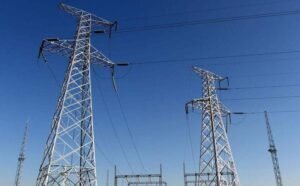
- Transmission Lines: Operate at ultra-high voltages (e.g., 325kV+) to move power for miles.
- Distribution Substations: Step the voltage down to medium levels (e.g., 12kV).
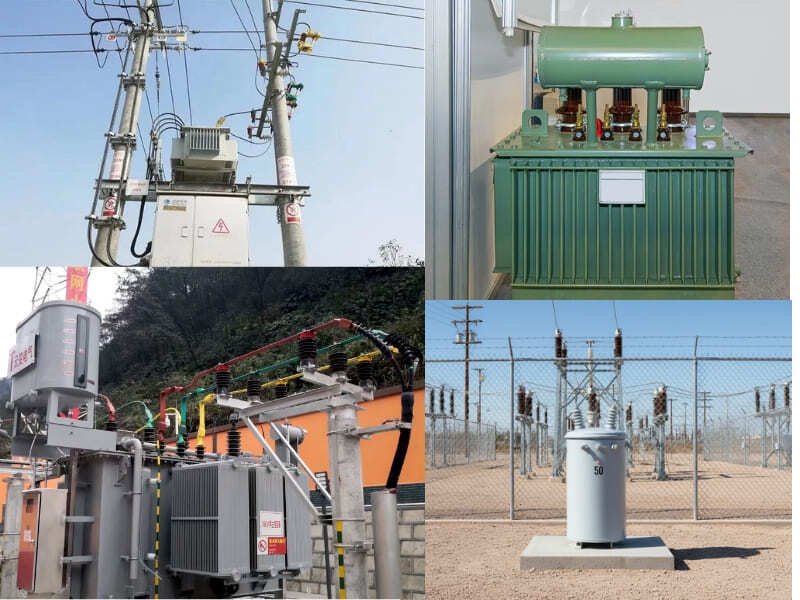
- Final Delivery: A Distribution Transformer4 (the gray box on the pole) steps it down to the safe 120/240V used in your home.
2. Basic Definition & Core Components
A transformer is a static device that transfers energy through [electromagnetic induction](https://en.wikipedia.org/wiki/Electromagnetic_induction)2. It changes voltage while keeping the frequency the same.
| Component | Role | Preferred Materials (YEEG Standard) |
|---|---|---|
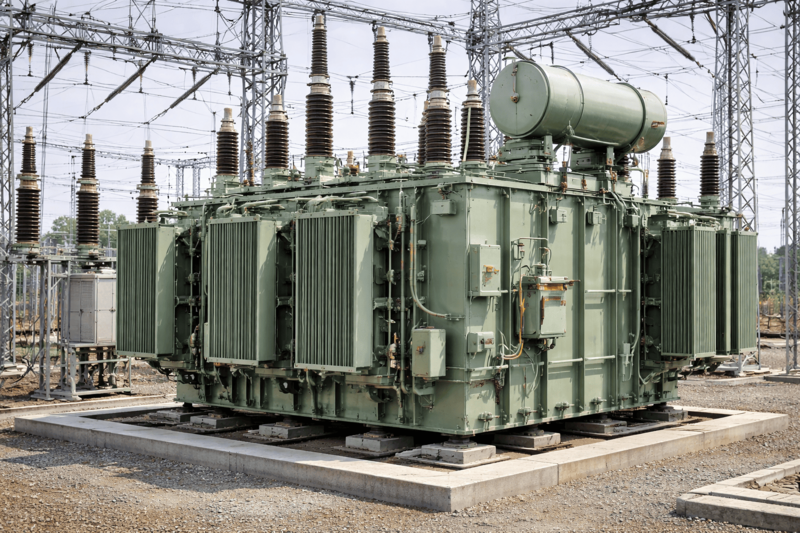
| Iron Core | Guides magnetic flux. | High-grade CRGO silicon steel. |
| Windings | Primary & secondary coils. | High-conductivity electrolytic copper. |
| Insulation | Prevents short circuits. | Transformer-grade paper and mineral oil. |
| Cooling | Dissipates heat. | Sealed steel tank with cooling fins. |
3. How Do Transformers Work? (For Dummies)
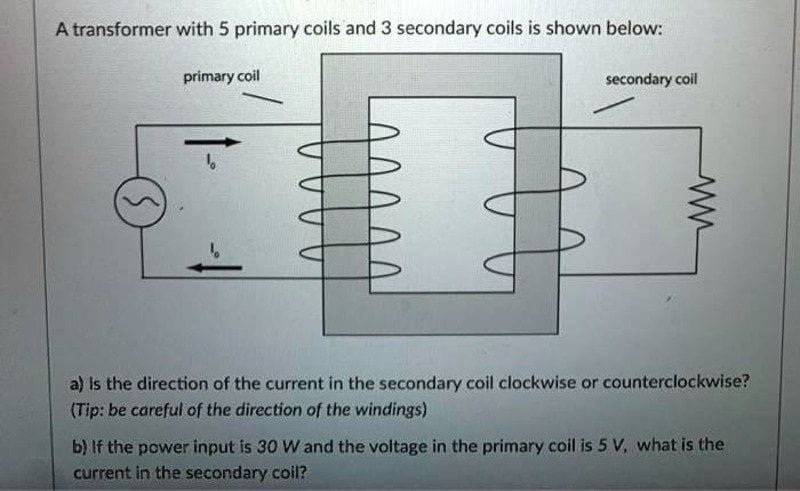
The process relies on Faraday’s Law of Induction5. It works in four logical steps:
- AC Power In: Alternating current enters the primary winding.
- Magnetic Field: The changing current creates a shifting magnetic field in the iron core.
- Flux Transfer: The core channels this field to the secondary winding.
- Inducing Voltage: The changing field "induces" a new voltage in the second coil.
The magic is in the Turns Ratio:
$$\frac{V_p}{V_s} = \frac{N_p}{N_s}$$
If the secondary has more turns ($N_s$), it’s a Step-up; fewer turns, it’s a Step-down.
4. What Happens When a Transformer "Blows"?
A transformer failure is a violent event, often caused by insulation breakdown6.
- The Arc: A breach in insulation creates a massive electrical arc.
- Pressure: The arc vaporizes the cooling oil into gas in microseconds.
- The Bang: The internal pressure ruptures the steel tank, causing a loud explosion and fire.
5. AC vs. DC7: Why Transformers Only Work with AC
Transformers never work with Direct Current (DC).
- AC naturally changes direction, creating the moving magnetic field required for induction.
- DC creates a static magnetic field. Without a changing field, no voltage is induced. Connecting to DC essentially creates a short circuit, which will melt the windings and destroy the unit.
FAQ: Real-Life Application
Q: Who is the most popular transformer?
A: In the power industry, it’s the Oil-Immersed Distribution Transformer. You see them everywhere on poles or as green pad-mount boxes.
Q: What is the lifespan of a transformer?
A: A well-maintained YEEG Transformer can last 25 to 40 years. The key to longevity is managing heat and moisture.
Q: What are the 4 main types?
A: Step-up, Step-down, Distribution, and Instrument transformers.
Conclusion
Transformers are the silent heroes of modern life. From generating megawatts at a power plant to charging your phone, they ensure electricity is safe and efficient.
As a leading OEM/ODM manufacturer, YEEG Transformer provides robust solutions for utilities and industrial projects worldwide. Contact our engineering team to learn more about our high-efficiency distribution systems.
-
Understanding transformers is crucial for grasping how electricity is distributed and utilized in our daily lives. ↩
-
Explore the principles of electromagnetic induction, which are fundamental to many electrical devices and technologies. ↩ ↩
-
Discover the role of Step-up Transformers in increasing voltage and reducing energy loss in power transmission. ↩
-
Gain insights into Distribution Transformers, which are essential for delivering safe electricity to homes. ↩
-
Explore Faraday’s Law, a key principle that underpins the operation of transformers and many electrical devices. ↩
-
Learn about insulation breakdown, a critical failure mode in transformers that can lead to catastrophic events. ↩
-
Understanding the differences between AC and DC is essential for grasping why transformers only work with AC. ↩