Transformers are crucial in ensuring the efficiency and safety of small industrial plants. Selecting the right size is essential to avoid frequent outages and ensure smooth operations. In this guide, I’ll walk you through determining the right transformer size for your plant.
To size a distribution transformer correctly, calculate your plant’s total connected load1, account for motor starting currents2, apply safety margins3, adjust for environmental factors, and consider non-linear loads4. This ensures efficient power management, reduces the risk of overloads, and accommodates future growth.
Understanding these steps is vital for optimum transformer performance and plant efficiency. Let’s dive deeper into each stage of the process.
Step 1: Determine Your Total Connected Load?
Understanding your total connected load is the first step in transformer sizing. Ignoring this can lead to under-sizing, causing efficiency and safety issues in your plant.
To determine your total connected load, list the nameplate power (kW) of all devices. Convert these kW values to kVA by considering the power factor5, typically 0.8 for industrial settings or 1.0 for solar applications.
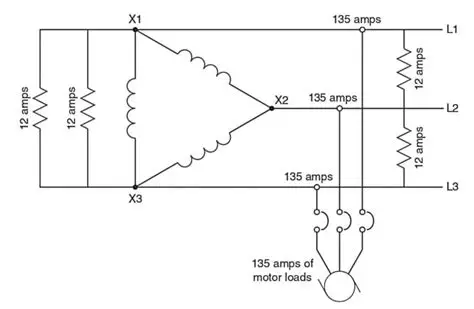
When calculating the total connected load, consider both motor and non-motor loads. Add these to get the maximum power requirement in kilowatts. Then, divide by the power factor to get the apparent power in kVA. It’s often advisable to use multiple smaller transformers instead of one large one. This approach prevents complete power loss in case of a fault and allows for operational flexibility during low-demand periods.
Step 2: Account for Motor Starting Currents (Inrush Current)?
Underestimating motor starting currents can lead to frequent tripping of transformers, disrupting plant operations.
Industrial motors have inrush currents6 6-8 times their running current. Ignoring this can cause the transformer to trip frequently when equipment is turned on.
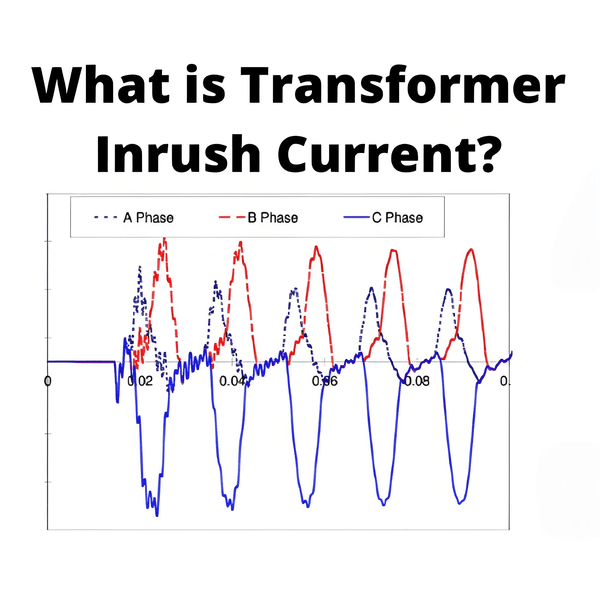
When sizing a transformer, factor in the high inrush currents of motors. This ensures the transformer can handle the surge without tripping. Consider using soft starters or variable frequency drives to manage inrush currents effectively, further enhancing transformer performance and longevity.
Step 3: Apply Safety Margins and Future Expansion (The 80% Rule)?
Planning for future growth is integral to optimizing your plant’s power management strategy.
It’s wise to keep 20% – 25% of redundancy capacity to allow for future production line additions. This spare capacity ensures that when the plant expands, the power system can accommodate increased demands without significant upgrades or downtime.
Implementing the 80% rule7 helps avoid frequent transformer upgrades as your plant grows. By sizing the transformer to handle only 80% of the maximum calculated load, you ensure there’s always room for growth, minimizing disruption and costs associated with future expansions.
Step 4: Adjust for Environmental Factors (Temperature & Altitude)?
Environmental factors can significantly affect transformer performance. Ignoring these can lead to unexpected failures and inefficiencies.
Derating factors adjust transformer capacity for conditions above 1000m altitude or temperatures above 40°C.
| Condition | Derating Factor |
|---|---|
| Altitude > 1000m | 0.95 |
| Temp > 40°C | 0.90 |
Consider local environmental conditions when sizing transformers. Derating factors ensure the transformer operates efficiently under extreme conditions, preventing overheating and extending its lifespan. This adjustment is crucial for locations with high altitudes or extreme temperatures.
Step 5: Consider Non-Linear Loads (K-Factor)?
Non-linear loads can distort power quality, leading to inefficiencies and potential damage to transformers.
For harmonic loads like variable frequency drives (VFDs) and LED lighting, K-rated transformers8 are necessary to handle the harmonic distortion. Without proper consideration, these loads can cause overheating and reduce transformer efficiency.
When integrating non-linear loads4, ensure your transformer has an appropriate K-rating. This ensures it can handle harmonic distortions without overheating. Consulting with specialists can help determine the best transformer configuration for your plant’s specific load profile, maximizing efficiency and longevity.
Conclusion
Sizing a distribution transformer requires careful consideration of connected loads, inrush currents, safety margins, environmental factors, and non-linear loads. Proper sizing ensures efficiency, accommodates future growth, and minimizes operational disruptions.
-
Understanding total connected load is crucial for accurate transformer sizing, ensuring efficiency and safety in your plant. ↩
-
Motor starting currents can significantly impact transformer performance; learn how to account for them to avoid operational disruptions. ↩
-
Safety margins are essential for future growth and efficiency; explore how to implement them effectively in your power management strategy. ↩
-
Non-linear loads can distort power quality; understanding them is key to selecting the right transformer for your needs. ↩ ↩
-
Power factor is essential for accurate load calculations; understanding it can enhance your transformer sizing process. ↩
-
Inrush currents can cause frequent tripping; understanding them is crucial for effective transformer sizing and operation. ↩
-
The 80% rule helps plan for future growth; explore how it can minimize costs and disruptions in your plant. ↩
-
K-rated transformers are vital for handling harmonic distortion; learn when to use them for optimal performance. ↩