Choosing the wrong transformer for your EV charging station can lead to budget overruns and operational nightmares. It’s a costly mistake that many project managers unfortunately make.
The key is to size your transformer correctly and select a type built for the job. Use this formula: Transformer kVA = (Total Charger kW × Simultaneity Factor) ÷ Power Factor × (1 + Redundancy). Then, choose a K-rated or rectifier transformer to handle the harsh electrical environment.
That formula is your starting point, but it’s not the whole story. The world of Level 3 fast charging has unique challenges that can turn a standard transformer into a very expensive paperweight. I’ve seen it happen. Let’s walk through the details so you can avoid those pitfalls and ensure your project is a success from day one.
What is a Level 3 EV charging station1?
Your client wants an "EV fast charging" station, but what does that actually mean? The terminology can be confusing, leading to misaligned expectations and incorrect equipment specifications.
A Level 3 EV charging station, also known as a DC Fast Charger (DCFC)2, supplies direct current (DC) power straight to a vehicle’s battery. This bypasses the car’s onboard charger, allowing for incredibly fast charging times, often adding hundreds of miles of range in under an hour.
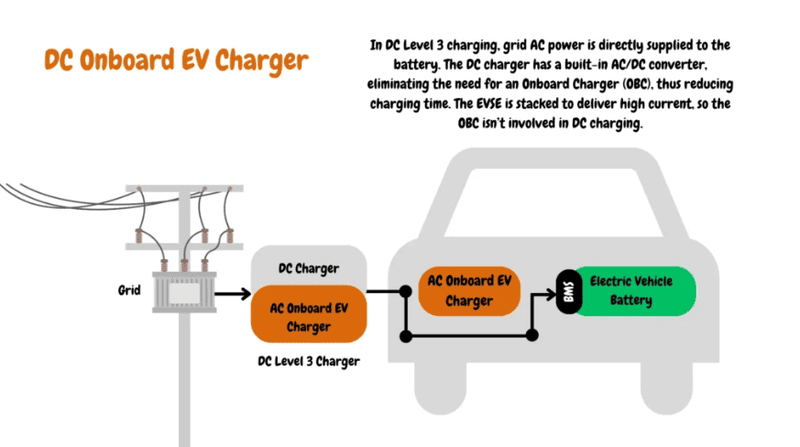
When you charge at home with a Level 1 or Level 2 charger, you are feeding AC power into your car. The vehicle has a small, onboard converter to turn that AC power into the DC power its battery needs. This process is slow because the onboard converter is limited in size and power. A Level 3 station changes the game completely. It is, in essence, a massive, ground-based AC-to-DC power converter. It takes high-power AC from the grid, converts it to high-voltage DC, and pushes it directly into the car’s battery system. This is why charging times drop from many hours to as little as 15-30 minutes. Understanding this is critical. You’re not just installing a "power outlet." You are installing a powerful piece of industrial electronics, and the transformer is its heart, feeding it the raw power it needs to perform this conversion.
Which transformer is used in an EV charging station?
You might think any distribution transformer with the right kVA rating will work. This assumption is a direct path to equipment failure and project delays. It’s a common trap.
For Level 3 fast charging stations, you cannot use a standard distribution transformer. You need a specialized rectifier transformer or a K-rated transformer. These are designed to handle the massive harmonic distortion3 created by the AC-to-DC converters in the chargers, preventing overheating and premature failure.
A standard transformer is built for clean, predictable, linear loads like lights and motors. The power they draw is a smooth, consistent wave. EV chargers are the opposite; they are highly non-linear loads. They pull power from the grid in rapid, sharp pulses during the AC-to-DC conversion process. This creates a type of electrical pollution called "harmonics" that flows back into the transformer. Think of it like trying to run a finely tuned engine on dirty, contaminated fuel. These harmonics create extra heat, specifically in the transformer’s core and windings. A standard transformer isn’t designed to dissipate this extra heat. It will overheat, lose efficiency, and eventually fail. A K-rated transformer is specifically built with larger neutral conductors and special core construction to handle the heat from harmonics. For the most demanding sites, a multi-pulse rectifier transformer (e.g., 12-pulse or 24-pulse) is the professional choice, as it’s designed to actively cancel out the most damaging harmonics.
Is 5V 2A considered fast charging?
We hear "fast charging" everywhere, from our phones to our cars. But the scale is vastly different, and confusing the two can lead to a dangerous underestimation of power needs.
No, 5V at 2A is 10 watts, which is standard for charging small electronics like a phone. A Level 3 EV fast charger operates at power levels of 50,000 to 350,000 watts or more. The difference is like comparing a garden hose to a fire hydrant.
It’s crucial to grasp the immense difference in power scale. A phone charger’s 10 watts (5 volts x 2 amps) is tiny. A single 350-kilowatt Level 3 charger delivers 350,000 watts of power. That is 35,000 times more powerful than the charger in your pocket. I once had a client, new to the EV space, who had budgeted for their charging station infrastructure as if it were just a larger version of a commercial building’s electrical system. We had to sit down and show them the numbers. A station with just four of these chargers could have a peak demand of over one megawatt. This isn’t about adding a few new circuits; it’s about installing utility-scale power infrastructure. This massive power demand is what puts such incredible stress on every single component, especially the transformer that stands between the grid and the chargers.
How Do You Correctly Size a Transformer for a Charging Station?
Choosing the wrong transformer size is a classic project mistake. Go too big, and you waste money on idle capacity. Go too small, and you face constant tripping and unhappy customers.
Use this formula for an accurate starting point: Transformer Capacity (kVA) = (Total Charger Power kW × Simultaneity Factor) ÷ Power Factor × (1 + Redundancy Factor). This balances initial cost with future needs and peak demand, ensuring your station operates efficiently and reliably.
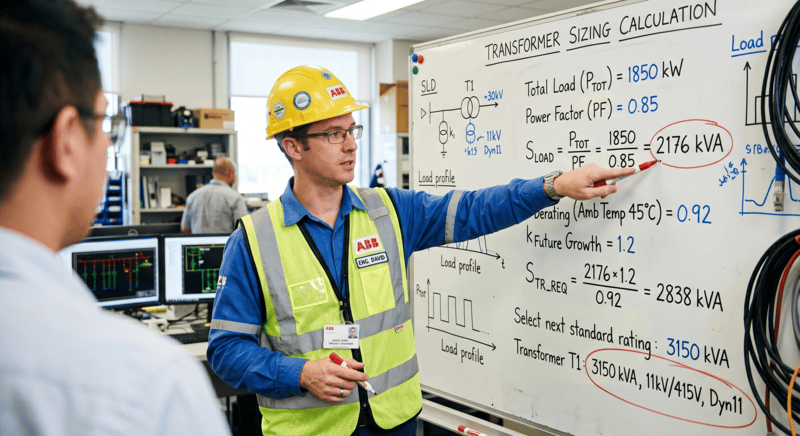
Let’s break down that formula so you can use it with confidence.
- Total Charger Power (kW): This is the simple sum of the maximum power ratings of all your charging stalls.
- Simultaneity Factor (0.7 – 0.9): It’s unlikely all chargers will be used at 100% power at the exact same time. For a commercial complex where drivers top up randomly, you can use a lower factor like 0.8. For a logistics park where a fleet of trucks charges overnight, you need a higher factor, like 0.9.
- Power Factor (~0.9): The EV chargers themselves aren’t perfectly efficient. The power factor accounts for this. 0.9 is a safe, standard value to use.
- Redundancy Factor (10% – 20%): You must plan for the future. This adds capacity for handling unexpected peak loads or for adding more chargers later without replacing the transformer.
Let’s apply this to two real-world scenarios.
Scenario 1: Commercial Complex
- Setup: 8 chargers @ 120 kW each.
- Assumptions: Random usage (Simultaneity Factor: 0.8), future growth planned (Redundancy: 15%).
- Calculation: (8 chargers × 120 kW × 0.8) ÷ 0.9 × (1 + 0.15) = 997 kVA
- Recommendation: Select a 1000 kVA transformer. It meets the need perfectly and provides a good balance of cost and capacity.
Scenario 2: Logistics Park
- Setup: 5 chargers @ 120 kW each for a truck fleet.
- Assumptions: Concentrated usage (Simultaneity Factor: 0.85), high potential for expansion (Redundancy: 20%).
- Calculation: (5 chargers × 120 kW × 0.85) ÷ 0.9 × (1 + 0.20) = 680 kVA
- Recommendation: A 630 kVA unit would be too small. An 800 kVA transformer is the smart choice here, as it safely covers the current load and avoids the massive cost of a future upgrade.
What are the three types of EV charging stations?
When planning an EV charging project, understanding the different levels is the first step. Each level serves a different purpose, has different power needs, and impacts your infrastructure choices.
The three main types are Level 1 (slow, 120V AC), Level 2 (medium, 240V AC), and Level 3 (fast, 480V+ AC input for DC output). Level 1 and 2 are for home or destination charging, while Level 3 is for rapid, on-the-go charging.
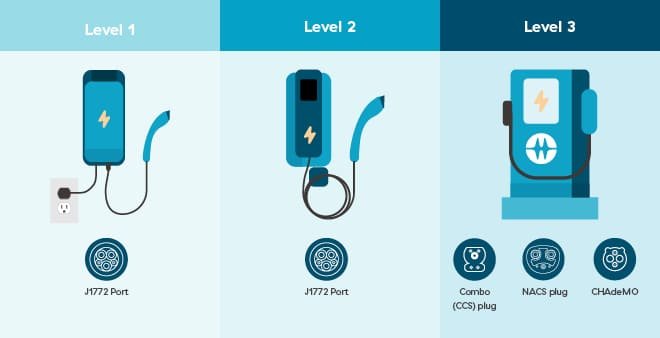
Thinking about these levels in a structured way helps clarify the project scope. Each one represents a huge jump in power and infrastructure complexity. A simple table makes the differences clear.
| Feature | Level 1 | Level 2 | Level 3 (DCFC) |
|---|---|---|---|
| Voltage | 120V AC | 208-240V AC | 480V+ AC (input) |
| Power Output | ~1.4 kW | ~7-19 kW | 50 kW – 350 kW+ |
| Charging Time | 20+ hours | 4-8 hours | 15-60 minutes |
| Typical Location | Home (standard outlet) | Home, Workplace, Public | Highway Corridors, Hubs |
| Transformer Need | None | Uses existing panel | Dedicated Transformer Required |
As you can see, Level 1 and 2 charging solutions can often be integrated into a building’s existing electrical system. They don’t require their own dedicated power transformer. However, when you step up to Level 3, everything changes. The power demand is so great that it requires its own medium-voltage feed from the utility and a dedicated, purpose-built transformer to step that voltage down. This is the equipment that this guide is focused on, as it represents a significant engineering and investment challenge for any project.
The Harmonic Trap: Standard Distribution vs. Rectifier Transformers?
A low-cost quote using a standard transformer for a DC fast charging station seems tempting. But this "saving" is a trap that leads to catastrophic failure and massive hidden costs.
Standard transformers aren’t built for the non-linear loads of EV chargers. Harmonics from the AC-DC conversion cause them to rapidly overheat, forcing you to derate them by up to 50% or risk a fire. This is why a K-rated or rectifier transformer is non-negotiable.
I have seen EPC contractors4 get burned by this. A less-reputable supplier will try to win a bid by quoting a standard distribution transformer, knowing it’s cheaper. The problem is, it doesn’t work. As soon as the charging station is commissioned, the harmonics generated by the chargers start cooking the transformer’s core. We’ve seen cases where a standard 1000 kVA transformer had to be operated at less than 500 kVA (derated by 50%) just to keep it from overheating. This means you paid for capacity you can’t even use. Worse, it could fail completely. At YEEG, we strictly adhere to IEC and ANSI standards. For these projects, we configure transformers with a K-factor rating (like K-9 or K-13) or provide specialized 12/24-pulse rectifier transformers. This isn’t just about protecting the equipment. It’s about protecting the project. Using the wrong transformer can put your power quality outside the limits of standards like IEEE 5195, leading to huge fines from the local utility and forced shutdowns until you fix it. The "cheaper" option ends up costing far more.
Pure Copper & Thermal Rise: Surviving the 500A Continuous Load?
Your transformer is installed outdoors, facing extreme temperatures and relentless high currents. The materials inside it will determine if it survives its first summer or becomes an expensive failure.
Many overseas suppliers cut costs with "copper-clad aluminum" windings. Under a continuous 500A load from a fast charger, these aluminum coils overheat and cause insulation failure. We insist on 100% pure copper windings6 and a low temperature rise design to guarantee reliability.
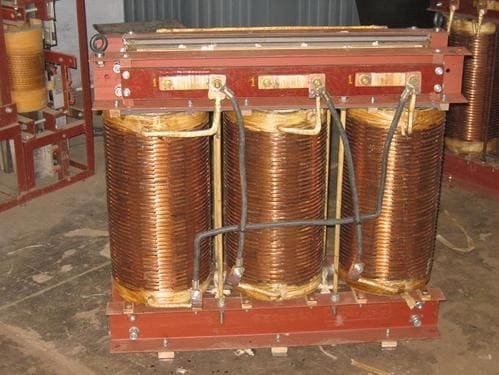
A top-tier fast charger can continuously draw currents approaching 500A. This relentless load generates a huge amount of heat. The most common disaster we see in procurements from overseas is a client receiving a transformer with aluminum windings that were sold as copper. Aluminum has about 60% higher electrical resistance than copper. This means it gets much, much hotter under the same load. In a compact, outdoor enclosure with limited airflow, this heat is a killer. It rapidly ages the transformer’s 220°C insulation system, leading to a breakdown and catastrophic failure. Our policy at YEEG is a non-negotiable line in the sand: we use 100% pure copper windings, and we state it clearly. We also design our EV charging transformers for a lower temperature rise, often 115°C or 130°C, to build in extra resilience for harsh conditions. Based on our delivery experience for charging hubs in South Africa and Europe, we guarantee that the test reports, drawings, and nameplate data match the physical unit you receive. This practice has reduced on-site failures to zero for our clients, saving them tens of thousands of dollars in emergency international shipping and crane fees for a replacement.
Compact Footprint & Voltage Matching: Engineering the EVSE Skid?
You have to fit a transformer, switchgear, and chargers into a tiny, pre-fabricated skid. A standard, off-the-shelf transformer is too big and has the wrong voltage, threatening project delays.
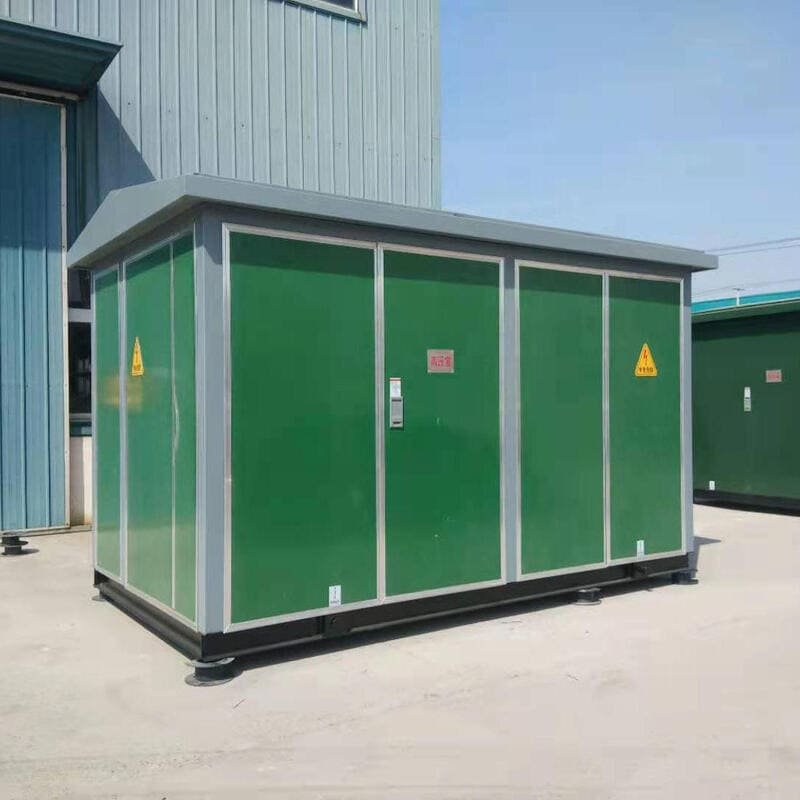
Urban charging hubs have no space to waste. We specialize in custom-designing transformers up to 35kV that are optimized to fit into extremely compact skids or NEMA 3R enclosures. We also match the voltage ratio perfectly to your rectifier, eliminating extra equipment and on-site modifications.
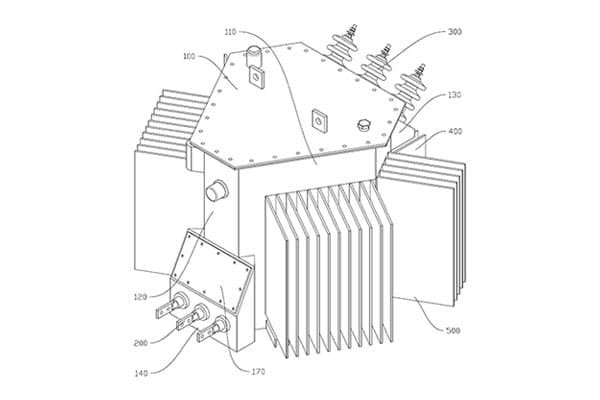
As an EPC contractor, you know that space is money, especially in urban areas. The trend is to integrate the entire charging system—transformer, switchgear, controls—into a single, compact, pre-assembled unit called a skid or into a NEMA 3R outdoor cabinet. The problem is that standard, mass-produced transformers are rigid in their dimensions. They are often too tall, too wide, or have connections in the wrong places. Furthermore, their standard voltage ratios might not be the ideal input voltage for your specific brand of charger. This forces you to add another piece of equipment, like a buck-boost unit, or perform difficult and time-consuming rewiring on-site. This is where our core engineering team shines. We specialize in non-standard, custom designs for transformers up to 35kV. We can take your exact, restrictive dimensional requirements and perform millimeter-level 3D structural optimization to make it fit. We will build the transformer with the precise voltage ratio your charger needs. The r
-
Discover the advantages of Level 3 charging stations, including faster charging times and increased efficiency. ↩
-
Explore the technology behind DC Fast Chargers and their role in modern EV infrastructure. ↩
-
Understanding harmonic distortion is key to selecting the right transformer for EV charging stations. ↩
-
Learn about the critical role of EPC contractors in the successful execution of EV charging projects. ↩
-
Understanding IEEE 519 standards is crucial for maintaining power quality in EV charging systems. ↩
-
Discover how pure copper windings enhance reliability and performance in high-load applications. ↩