Transformer lead times keep stretching, and projects miss energization dates. When that happens, I pay liquidated damages, and I lose trust with the site team.
China is still the best sourcing base in 2026 because it combines scale, full upstream materials, fast engineering response, and export-ready factories. I use China to reduce lead-time risk and control total landed cost.
I see a global industrial storm. Chips and semiconductors cooled down for many buyers. Transformers became the new bottleneck. I now treat transformer sourcing as a schedule-critical engineering decision.
Why are transformers so popular in China?
Global demand surged, and many regions cannot expand output fast. That pushes buyers into long queues, and projects get stuck waiting for one piece of equipment.
Transformers are popular in China because China has deep capacity and a complete supply chain from core steel to final testing. That lets me place orders faster, switch suppliers faster, and shorten delivery under stress.
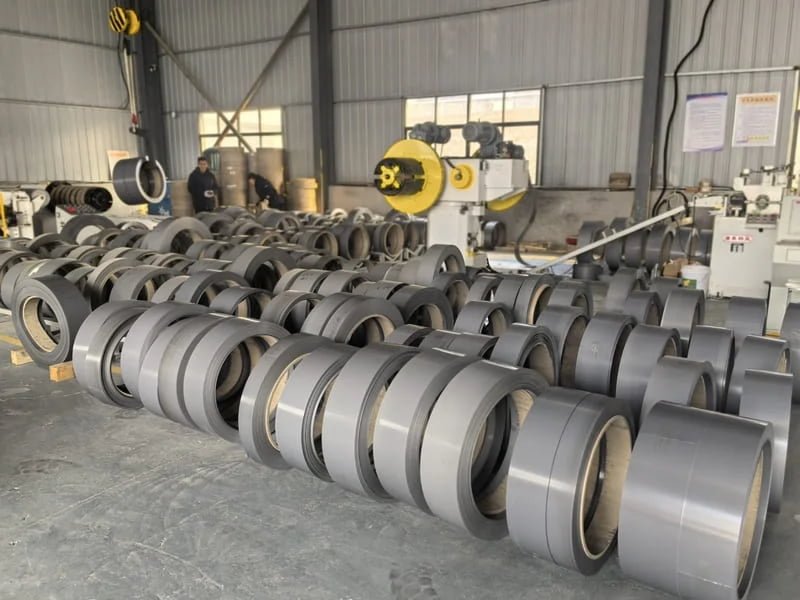
In 2026, I do not start with price. I start with capacity, materials, and labor. A transformer is not like a phone. It does not assemble from modular parts in a clean room. It needs heavy materials and skilled work. It needs CRGO oriented silicon steel1 for the core. It needs copper or aluminum for windings. It needs paper and pressboard insulation. It needs tank steel, radiators, bushings, and oil or resin systems. It also needs people who know winding tension, insulation build, and drying discipline.
Why the supply chain matters more than the factory name
I see buyers focus on “which factory” first. I focus on “which industrial cluster” first. When the upstream chain2 is close, changes are faster. When CRGO supply gets tight, I can still secure a slot if the factory has stable relationships. When a bushing lead time shifts, I can qualify a second brand faster. I do not need miracles. I need options.
China’s upstream advantage is not only cost
In my notes from 2025 discussions, I kept hearing that large power transformers could face a supply gap around 30%, and distribution transformers could be short by about 10%. I saw developers in India delay solar interconnections because they could not get key equipment. I also heard US tech and utilities complain about lead times that stretched to one or two years. When lead time becomes the enemy, upstream strength becomes the deciding factor.
China also leads in core steel. Oriented silicon steel is often called the “crown jewel” of steel. It is hard to make, and it uses a lot of energy. When China produces this at scale, China protects the whole transformer chain. In 2024, China’s oriented silicon steel output was reported around 3.0325 million tons, which is several times larger than Japan and the US. I also watch the progress of thin-gauge lines like 0.18 mm and 0.20 mm, because that supports lower core loss options.
Is 2026 still a transformer shortage year?
AI data centers and renewables keep pushing load growth, and grid upgrades cannot catch up. That leaves many utilities and EPCs fighting for the same production slots.
Yes, 2026 still feels like a transformer year because demand is still high and lead times are still long. I protect schedule by freezing specs early, reserving slots early, and qualifying two factories before I need them.
I use a simple model to explain the demand shock. AI data centers add big, steady loads. They also add fast build schedules. Utilities must add feeders, substations, and distribution capacity. At the same time, renewables change the shape of the grid3. A traditional thermal plant can feed a lot of load through a smaller number of big nodes. Wind and solar spread generation across many sites. Each site needs step-up transformers, collection systems, and interconnection equipment. I have seen projects where a solar plant needed more transformer units than a comparable thermal capacity would have needed, because the topology is different.
Aging grids make the problem worse
I also see old equipment everywhere. In 2025, reports discussed that much of Europe’s grid assets are 40 to 50 years old. I also saw figures that a large share of US transmission and distribution equipment is beyond intended life. When utilities replace equipment at scale, transformer demand rises even if new load does not rise. So the demand pressure is two-sided. It is new load plus replacement.
The market behavior changed in 2025, and it stayed in 2026
I heard a trade veteran say, “It is not about paying more. You can bring cash and even sign three-year contracts, and they still may not have a slot.” I do not repeat this as drama. I repeat it because it changes how I buy. I do not buy at the last minute. I buy time.
When I compare regions, I often see developed markets with capacity that moved away years ago, or capacity that aged. That creates one to two year lead times in many cases. China still offers shorter delivery in many cases, and I also see price levels that can be far below US equivalents for comparable specs. In that kind of market, China becomes the natural pressure valve for global demand.
How do I cut lead time risk when I buy from China?
Many buyers ask for the fastest delivery, but they keep changing specs and approvals. That causes rework, and factories stop trusting the schedule.
I cut lead time by locking core-and-coil decisions first, then locking accessories, then locking documents. I also reserve production slots early and use a second factory as backup for the same rating family.
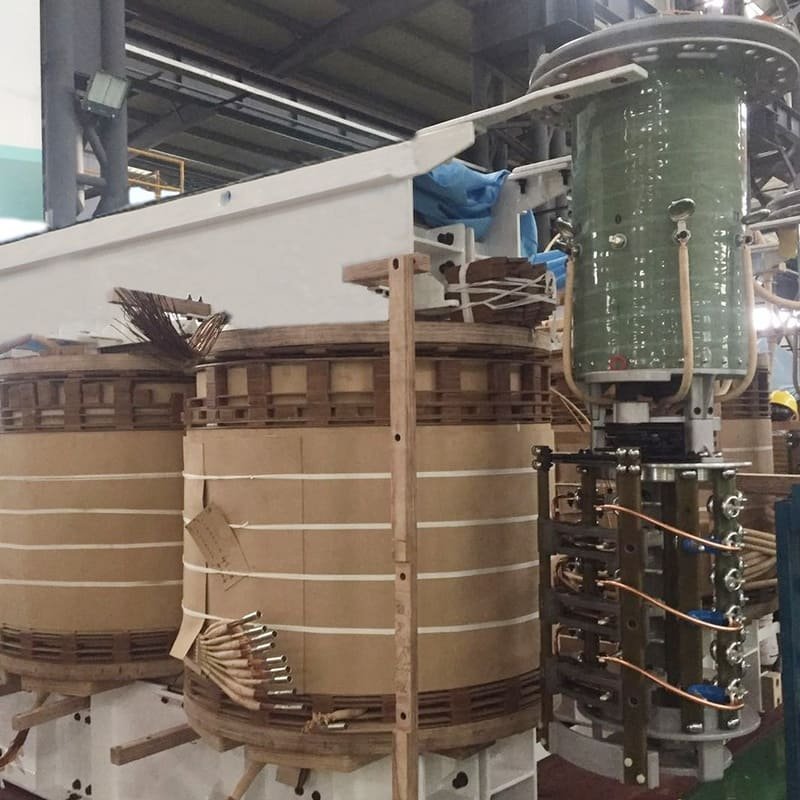
I treat lead time as a chain, not a single number. I break it into segments, and I manage each segment with clear gates.
Segment the lead time, then control the gates
This is the lead-time map I use on most distribution transformer orders:
| Segment | What can break it | What I do to protect it |
|---|---|---|
| Core materials | CRGO allocation, grade change | Confirm loss target, lock steel grade early |
| Windings | conductor supply, design changes | Freeze kVA, HV/LV, vector group, impedance |
| Insulation & drying | moisture, process overload | Require drying records and process control |
| Tank & paint | tank queue, coating rework | Confirm dimensions, lifting, corrosion class |
| Accessories | bushings, tap changer lead time | Approve brands early, qualify alternates |
| Testing | test bay backlog | Book FAT window, confirm test list early |
| Shipping | port congestion, packing issues | Confirm packing method, book logistics early |
I learned this on a solar EPC job. The client pushed for quick delivery. The engineering team then changed impedance after the design release. The factory had to rewind. We lost weeks. After that, I created a rule. I only change electrical specs before winding starts. After winding starts, changes must be treated like a new order.
Use “envelope freeze4” to stop late changes
I freeze the electrical envelope early. I confirm kVA, HV/LV, frequency, vector group, impedance, losses, taps, cooling, and service conditions. I also freeze key mechanical limits like footprint, cable box direction, and lifting points. When I do this, the factory can cut core and start winding with less fear. The factory can also allocate steel and conductor with confidence.
Slot reservation beats negotiation
In a shortage market, negotiation does not create capacity. Slot reservation creates capacity. I sometimes use a frame order for common ratings, then release exact quantities by month. This works well when a utility has repeat orders. I also keep a second qualified factory ready. This is not to threaten anyone. It is to keep my project safe.
How do I compare China vs local suppliers without lying to myself?
If I only compare ex-works price, I miss delays, claims, and rework. Then my “cheap” unit becomes the most expensive unit.
I compare regions using total landed cost and schedule risk. I add quality risk, documentation risk, shipping risk, and field rework risk. China often wins because it balances these risks with strong capacity.
I use a very practical comparison method. I assume the project is late by default. Then I ask which sourcing choice reduces the chance of late delivery, and which choice reduces the cost of being late.
Build a “total landed risk” worksheet
I use a table like this in project meetings. I do not pretend it is perfect. I use it to force honest discussion.
| Cost or risk item | What it looks like in real projects | How I measure it |
|---|---|---|
| Base unit price | Quoted price | Quote comparison, same scope |
| Engineering cycle | Days to finalize drawings | Response time and revision count |
| Lead time reliability | Promised vs actual | Historical variance, slot proof |
| FAT and test quality | Clean reports vs disputes | Test plan match, sample reports |
| Shipping and packing | Damage risk, clearance delays | Packing spec, case study photos |
| Field rework | Cable box, taps, wiring errors | NCR history and corrective actions |
| Delay cost | LDs, lost revenue | Project contract and revenue model |
Why China often wins on schedule economics
If US or EU lead time is one to two years, the schedule cost can dominate. In many projects, one month of delay costs more than any price difference. So I do not ask “which is cheaper.” I ask “which is safer for energization date.” If China can deliver months earlier, China can save far more than the invoice difference.
Price is still real, but I use it correctly
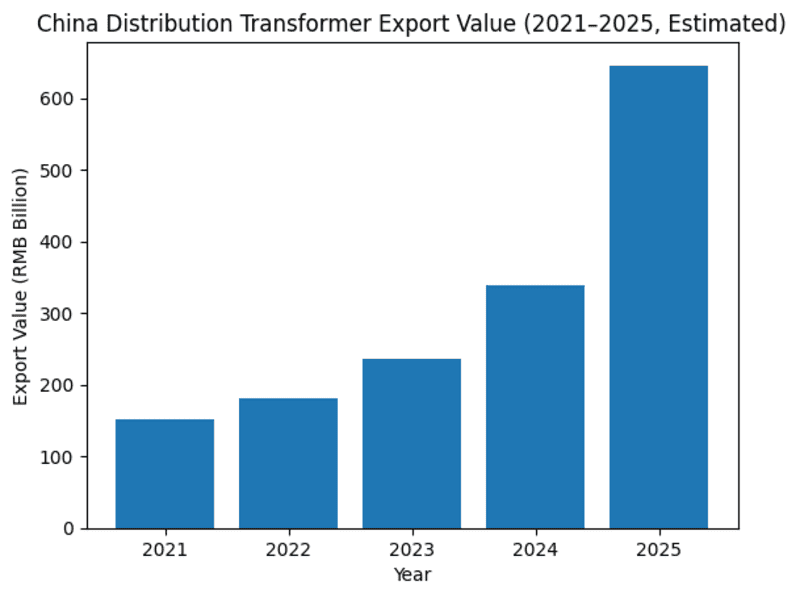
I also do not ignore price. I just place it in the right position. In 2025, I saw data that China’s transformer exports surged, and average export unit prices jumped. That tells me demand is strong. It also tells me that even China pricing can rise in a tight market. So I lock prices early when I can. I also specify clearly to avoid change orders. A vague spec creates a low quote, then a high final invoice.
How do I verify quality and compliance before shipment?
In a shortage market, some suppliers rush work. That can hide moisture, weak insulation, and poor sealing. Those problems appear later, and they are painful.
I verify quality by controlling materials, process records, and routine tests. I also use a clear ITP, witness points, and strict document matching from nameplate to test report.
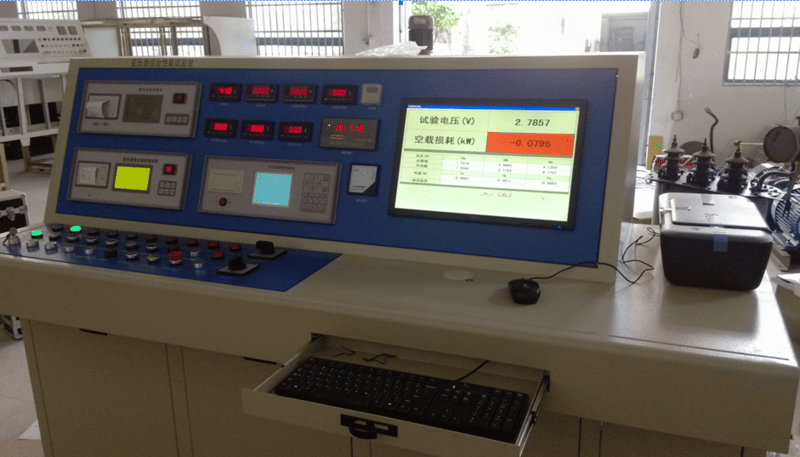
I focus on quality as a process, not as a promise. When I source from China, I do not rely on a brochure. I rely on controllable checkpoints.
Control what matters in distribution transformer reliability
Distribution transformer failures often come from insulation aging, overheating, moisture, and sealing issues. So I watch the parts of production that drive those outcomes.
Core and loss control
I confirm the core steel grade and thickness. I confirm the target flux density. If a factory pushes flux too high, no-load loss and noise rise. I also ask about core stacking method, like step-lap, because it affects loss and noise. I ask for no-load loss test data and trends.
Coil and insulation build
I confirm conductor type and cross section. I confirm insulation system and temperature class. I check clearances and creepage. I also check lead exits and bracing, because shipping vibration is real.
Drying and oil handling
I treat drying as a life-or-death step. I ask for drying curves and vacuum records when possible. I ask how they filter and degas oil. I ask how they control moisture in paper. A transformer can pass routine tests and still fail early if moisture is trapped.
Tank sealing and leak control
I ask how they test sealing. I want vacuum leak tests or pressure tests based on design. I also confirm gasket materials and surface prep. If the project is coastal, I confirm coating system and salt fog expectations.
Align the test plan with IEC or IEEE/ANSI5
I match tests to the standard that controls the contract. Routine tests usually include ratio, winding resistance, insulation resistance, no-load loss and current, load loss and impedance, and dielectric tests per the chosen standard. For critical projects, I add temperature rise, sound level, or impulse tests when the spec and rating justify it. I also confirm tolerances. A dispute about tolerances can delay shipment more than a failed test.
Make documents part of quality control
I require that the serial number, nameplate, and test report match exactly. I require that drawings are the released version. I require that packing lists match the shipped accessories. I learned this after a project where the unit was correct, but the paperwork mismatch caused customs and site acceptance delays.
FAQ: What should I ask before I place a transformer order in 2026?
Small spec gaps can create big delays, and suppliers can hide behind ambiguity. Then I lose time arguing while the project clock keeps moving.
I ask about standards, service conditions, impedance, losses, accessories, tests, documents, packing, and logistics. I also ask how the factory controls drying, sealing, and traceability, because that drives field reliability.
I keep my FAQ as a call script. I use it with procurement, consultants, and the factory engineer. I avoid fancy wording. I want clear answers.
1) What exact transformer identity am I buying?
I write one line: type, cooling, rating, HV/LV, frequency, vector group, taps, and standard. For example: oil-immersed distribution transformer, ONAN, 50/60 Hz, 11 kV / 0.4 kV, Dyn11, off-circuit taps, IEC 60076. If it is IEEE/ANSI, I name the C57 set that applies. I do not accept “IEC or ANSI is fine” as a complete answer.
2) What are the site service conditions?
I always send ambient max and min, altitude, indoor or outdoor, humidity, pollution level, and seismic needs. If the site is hot or high, I say it early. If the site is coastal, I specify corrosion class and creepage needs. If I hide these, the factory designs for a mild site, and I carry the risk.
| Site item | What I send | Why it matters |
|---|---|---|
| Ambient | max, min, average | temperature rise and aging |
| Altitude | meters above sea | dielectric and cooling margin |
| Pollution | inland, coastal, industrial | creepage and sealing needs |
| Installation | indoor, outdoor, kiosk | enclosure and coating choice |
| Seismic | project requirement | tank and bushing safety |
3) What impedance range do I need, and why?
Impedance affects fault current and parallel operation. I confirm the target impedance and the tolerance. I also confirm how the factory measures it. If I have multiple transformers in parallel, I tighten this control. I learned this after a project where two units had different impedance trends and the load sharing was not ideal.
4) How do I set loss guarantees without future disputes?
I set no-load loss and load loss guarantees at rated conditions. I also set test standard and tolerances. If I want high-efficiency or amorphous core, I confirm cost and lead time impact. I ask what remedy applies if losses exceed guarantee. I want this written, not implied.
5) What tests will I require, and when will they happen?
I list routine tests and any special tests. I set the FAT window early. I confirm whether I or a third party will witness. I confirm the report format and language. I also confirm calibration status of test equipment when the project is strict.
6) What drawings and documents will I approve, and how fast?
I list GA drawing, schematic, wiring, nameplate draft, ITP, test plan, and packing drawing. I set approval cycles in days. I also set a rule for revisions. If I do not manage this, the factory waits, then the factory blames the buyer, and the shipment slips.
7) How will the unit be packed and shipped?
I confirm seaworthy packing, internal bracing, bushing protection, moisture control, and shock indicators when needed. I confirm whether the unit ships oil-filled or dry. I confirm spare parts and accessories packing. I confirm Incoterms and port plan. I learned this after a unit arrived with preventable external damage that triggered long site acceptance steps.
Conclusion
In 2026, transformers are schedule-critical. I still source from China because it offers the strongest mix of capacity, supply chain depth, engineering speed, and controllable delivery.
-
Understanding CRGO steel’s significance can help you appreciate its role in transformer performance and efficiency. ↩
-
Understanding the upstream chain can provide insights into production speed and flexibility. ↩
-
Exploring this topic can provide insights into the future of energy distribution and infrastructure. ↩
-
Learning about envelope freeze can enhance your project management skills and improve delivery timelines. ↩
-
Understanding these standards can help ensure compliance and quality in transformer manufacturing. ↩