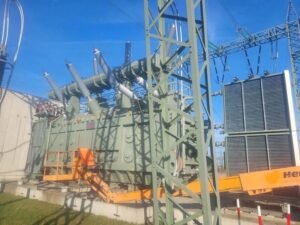
If your distribution transformer is aging, the risk is not just failure. It is unplanned outages, safety exposure, missed capacity growth, and long procurement lead times that turn a small problem into a multi-year headache.
Replace (not reinforce) when the unit shows irreversible insulation aging, repeat internal fault behavior, lost thermal margin, or when the total cost of ownership (losses + downtime risk + compliance) makes keeping it irrational. In today’s market, timing matters: waiting for a “final warning” can mean you fail first, then wait.
What “Reinforce” Really Means for a Distribution Transformer
In real projects, “reinforce” usually means one (or several) of these:
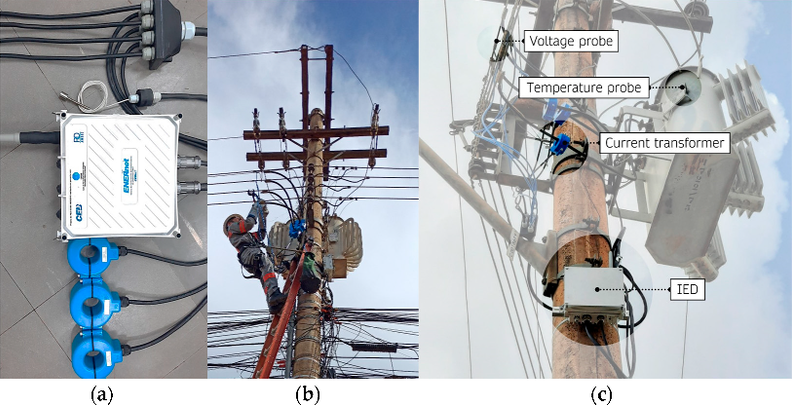
- Refurbish the existing unit1: re-gasket, fix leaks, replace bushings, service or replace LV/HV terminations, clean/upgrade cooling, oil processing, dry-out (limited cases), add monitors.
- Re-rate / reconfigure the system around it: move load, add a parallel unit, split feeders, add voltage regulation elsewhere, reduce harmonics, adjust protection, change operating profile.
- Extend life with better operating conditions2: lower hotspot temperature, fix ventilation, reduce overload duration, improve maintenance cycles.
Reinforcement works when the transformer is basically healthy and you are solving a component issue or a system issue.
Replacement is the right call when the transformer itself has become the constraint: the active part and insulation system3 are no longer trustworthy.
The Decision Has Changed in the Current Grid Environment
Two things make replacement decisions more urgent now:
1) Long lead times and tight supply4
Distribution transformer availability has been stressed for years, and many utilities have seen lead times stretch dramatically. When supply is tight, planned replacement beats forced outage every time.
2) Efficiency standards and loss economics5 are no longer “nice to have”
Old distribution transformers often waste meaningful energy 24/7 via no-load loss, and newer standards/benchmarks (US DOE rules, EU Ecodesign Tier 2) push buyers to treat losses as a real procurement requirement, not an afterthought.
So the modern question is not “can it run” but “does it still deserve a grid slot.”
Replace Instead of Reinforce: The 9 Triggers That Matter
1) You have evidence of irreversible insulation aging6
For oil-filled distribution transformers, the true life clock is the cellulose insulation.
Replace when you see a combination of:
- Paper condition trending to end-of-life territory (where DP is very low or strongly implied by oil markers)
- Moisture that keeps coming back (not just a one-time contamination)
- Oil oxidation indicators that keep worsening (acidity, sludge risk), especially if cooling performance is dropping
Reinforcement cannot restore brittle paper back into a mechanically strong insulation system. It can only slow further damage.
2) Fault behavior is repeating7, not random
A single event can be external. A pattern is internal.
Replace when you have recurring indicators such as:
- Repeat protection operations tied to the transformer
- Repeat fault gas generation patterns (if you can sample oil)
- Repeat partial discharge signatures (acoustic/UHF where applicable)
- Repeat bushing-related overheating or dielectric trend deterioration
If you keep “solving” symptoms and the same category of abnormality returns, that is the transformer telling you the core problem is inside the active part.
3) Thermal margin is gone (even after you fix cooling and site conditions)
Distribution transformers often die from heat history, not calendar age.
Replace when:
- Top-oil/hotspot runs higher than historical at similar load and ambient
- Cooling improvements and oil service do not restore normal temperature behavior
- The transformer shows signs of entering a heat-accelerated aging loop (sludge risk rises, temps rise, aging accelerates, repeat)
If thermal margin is gone, reinforcement buys months, not years.
4) The unit is structurally undersized for permanent load growth8
If load growth is permanent, “reinforce” becomes a coping strategy, not a solution.
Replace (or upsize) when:
- Overloads are frequent and predictable (daily peaks, seasonal peaks that are now the new normal)
- The unit runs near its limit for long durations
- The network plan says the load will continue rising (new buildings, EV charging, new industrial loads, data center clusters, electrification projects)
A distribution transformer can survive short overloads if it has thermal headroom. It cannot survive being undersized as a new baseline.
5) Leaks and corrosion9 are no longer “maintenance,” they are oxygen and moisture pathways
Persistent oil leaks are not cosmetic. They are how moisture and oxygen enter and accelerate insulation aging.
Replace when:
- Leaks are recurring even after gasket work
- Tank corrosion threatens structural integrity or sealing surfaces
- The unit cannot reliably maintain oil tightness under thermal cycling
- You see evidence that contamination/moisture is becoming chronic
Reinforcement is reasonable for a one-off leak on a healthy unit. If it is repeating, you are paying rent to entropy.
6) The transformer has a bad short-circuit story10 (or a deformation suspicion)
Distribution transformers may experience faults that impose huge mechanical forces. If the active part shifts, you may not get a gentle warning.
Replace when:
- There was a known severe fault event and the unit’s behavior changed afterward
- Tests/trends suggest winding movement or increased losses/heat for the same loading
- You cannot regain confidence with reasonable diagnostics
If short-circuit withstand strength is in doubt, this becomes a safety and reliability decision, not a cost decision.
7) You are spending money on the wrong side of the curve11
The classic “% of new unit cost” rule is useful, but you should upgrade it with reality.
Replace when:
- Repair + downtime + risk cost is trending toward “you are funding a temporary extension”
- You are stacking repairs (bushing this year, leaks next year, then another abnormality) on an already old active part
- You would not be surprised if the next failure is catastrophic
Reinforce when:
- The issue is clearly isolated (single bushing, single termination, fan controls, minor leak)
- You can reasonably expect multiple years of stable service after the fix
- Diagnostics support that the insulation system is still healthy
8) Losses are financially irrational12 (and you can prove it)
Distribution transformers have two loss streams:
- No-load loss: paid 24/7, even at zero load
- Load loss: rises roughly with the square of load
Replace when the annual cost of losses is clearly meaningful.
Simple TCO math you can drop into a proposal:
- Annual loss energy (kWh) ≈ Loss (kW) × 8760
- Annual loss cost ≈ kWh × electricity price
If the delta between the old unit and a modern unit is big, replacement becomes an operating cost reduction project, not just asset maintenance.
9) Compliance / procurement standards13 make reinforcement a dead end
Even if an old unit can be kept alive, it may not meet what the next project requires:
- efficiency benchmarks
- procurement specs
- safety expectations
- utility loss capitalization rules
- customer/tenant ESG reporting
If you are forced to replace “soon anyway,” then planned replacement now is often cheaper than reinforced replacement later.
When Reinforcement Is the Smart Choice
Reinforce instead of replace when you can answer yes to most of these:
- The abnormality is component-level and not evidence of active-part decay
- Oil condition (if testable) is stable, not trending worse
- Thermal performance is normal once cooling/site issues are fixed
- The unit is not structurally undersized for the next 3–5 years of load
- You can execute the fix fast and restore confidence fast
- Procurement lead time for a replacement would create unacceptable capacity risk if you wait (so you buy time intentionally and plan replacement in parallel)
Reinforcement is a strategy when it is intentional: buy time while you control risk.
A Practical Replace vs Reinforce Scorecard
Use this as a decision sheet you can send internally.
Condition and risk
- Insulation aging indicators: Low / Medium / High
- Fault recurrence pattern: No / Some / Yes (repeating)
- Thermal margin: Healthy / Tight / Gone
- Leak/corrosion severity: Minor / Manageable / Chronic
- Post-fault suspicion: No / Unclear / Yes
- Safety consequence (location criticality): Low / Medium / High
System reality
- Load growth outlook: Flat / Moderate / Strong
- Harmonics / distortion environment: Normal / Moderate / Harsh
- Redundancy available: Yes / Limited / No
- Replacement lead time risk: Low / Medium / High
If insulation aging is high, fault recurrence is yes, or thermal margin is gone, you usually stop debating and start planning replacement.
How to Make Replacement Easier to Approve (What I Put in the Justification)
Decision-makers approve replacement faster when you frame it in four numbers:
1) Reliability risk
Probability of failure is hard, but recurring events and trend deterioration are defensible.
2) Consequence of failure
Outage cost, safety exposure, customer impact, contractual penalties.
3) Energy loss cost
Show annual cost of losses and the delta vs a modern unit.
4) Time risk
If lead time is long, the decision is not “replace or not,” it is “replace now or replace during a crisis.”
Conclusion
Replace a distribution transformer instead of reinforcing it when the transformer shows system-level aging: insulation end-of-life behavior, repeating internal fault signatures, chronic leakage/corrosion, loss of thermal margin, or permanent undersizing under modern load growth. Reinforcement is smart only when it fixes a component problem and restores multi-year confidence.
-
Explore this resource to learn effective refurbishment techniques that can extend transformer life. ↩
-
Discover strategies to enhance transformer longevity through improved operating conditions. ↩
-
Understanding these components is crucial for making informed replacement decisions. ↩
-
This resource discusses the impact of supply chain issues on transformer availability. ↩
-
Stay updated on efficiency standards that influence transformer procurement. ↩
-
Learn to identify critical aging indicators to make timely replacement decisions. ↩
-
This guide helps in understanding fault patterns and their implications for transformer health. ↩
-
This resource provides criteria for assessing transformer capacity against load demands. ↩
-
Understand the risks associated with leaks and corrosion to ensure transformer reliability. ↩
-
Learn about the safety implications of short-circuit events in transformers. ↩
-
This article offers insights on cost-benefit analysis for transformer repairs. ↩
-
Discover methods to quantify losses and justify replacement decisions. ↩
-
Stay informed about compliance requirements that affect transformer replacement. ↩