Upgrading your transformers seems simple, but a wrong move can cause costly downtime and inefficiencies. This guide prevents that.
Key engineering considerations for a transformer upgrade include precise load analysis, lifecycle cost assessment, selecting the right type (oil vs. dry), ensuring installation compatibility, and planning for future maintenance. A holistic approach ensures reliability and cost-effectiveness for your project.

I’ve seen many upgrade projects go sideways because a single, crucial detail was missed in the early stages. The difference between a successful project and a failed one often comes down to asking the right questions from the very beginning. Let’s break down those questions to ensure your next upgrade is smooth, efficient, and future-proof.
What factors should be considered when selecting a transformer?
Choosing a new transformer based on price alone is a common mistake. It often leads to higher long-term costs and performance issues.
When selecting a transformer, you must consider future load growth1, total lifecycle cost2 (not just purchase price), site conditions, and energy efficiency standards3. These factors ensure the transformer is a valuable long-term asset, not a short-term fix.
When a client comes to us at YEEG for an upgrade, the first thing we discuss isn’t the price. It’s their long-term plan. I remember a factory owner who wanted the cheapest option to replace an old unit. We ran a Life Cycle Cost (LCC) analysis4 for him. The cheaper transformer would have cost him thousands more in energy losses over ten years. We convinced him to invest in a higher-efficiency S13 model instead. This kind of forward-thinking is critical. It involves a deep dive into your specific needs. We look at your current load, but more importantly, we project your load growth for the next 5-10 years, especially with new demands like EV charging stations5. This ensures the new unit has enough capacity without being oversized, which would waste energy. The selection process is also heavily influenced by your location.
Regional Differences in Transformer Selection
| Region | Key Selection Driver | Why It Matters |
|---|---|---|
| North America | Grid Modernization6 & EV Demand | Aging infrastructure and a surge in electric vehicles require high-capacity, robust transformers that can handle new load patterns. |
| Europe (EU) | Renewable Integration7 & Eco-Design | High penetration of solar and wind power demands transformers that can manage voltage fluctuations and meet strict environmental laws (e.g., SF6-free). |
| Asia-Pacific | Industrial Growth & Cost-Effectiveness | Rapid urbanization and industrial expansion mean projects focus on cost-efficient, high-efficiency transformers that can be deployed quickly. |
| Middle East | Extreme Climate Tolerance | High ambient temperatures and dusty conditions demand transformers with superior cooling systems and H-class insulation8 to prevent overheating and failure. |
What are the considerations of transformer design?
The "best" transformer design doesn’t exist. It’s about finding the right design for your specific application, or you risk paying for features you don’t need.
Key design considerations include choosing between oil-immersed and dry-type, optimizing for energy efficiency, selecting the appropriate cooling and insulation systems, and integrating modern protection and automation features for enhanced reliability and safety.
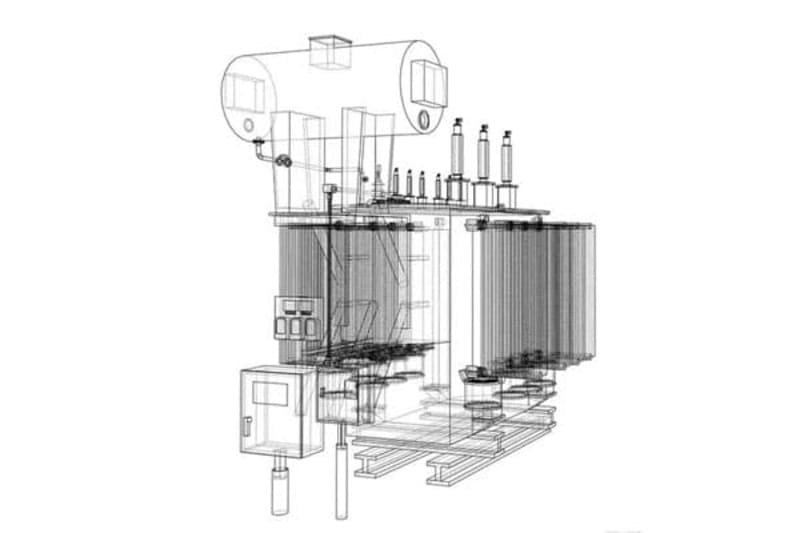
The first major design choice is the type: oil-immersed or dry-type. Oil-immersed transformers are excellent for high-capacity outdoor applications due to their superior cooling. However, they require more maintenance and have stricter fire safety requirements. Dry-type transformers are safer for indoor use, like in high-rise buildings or industrial facilities, because they are air-cooled and have lower fire risk. They are also more environmentally friendly but often come with a higher initial cost. After choosing the type, we focus on efficiency. Modern standards like GB 20052-2020 in China push for higher efficiency levels. We often recommend amorphous alloy core transformers9 for clients focused on minimizing long-term energy losses. The cooling system is another critical design point. While a standard ONAN (Oil Natural Air Natural) system is common, a project might need an ONAF (Oil Natural Air Forced) system with fans to handle higher loads, especially in warmer climates.
What are the basic components of a distribution transformer?
A transformer looks like a simple box, but its internal components are a complex system. Understanding them helps you specify and maintain your equipment better.
The basic components are the core, which provides a path for magnetic flux; the windings (primary and secondary), which carry the current; the tank, which contains and protects the internal parts; and the insulating medium (oil or air).
Let’s break down the parts that do all the work inside that steel box. Think of it like the engine of your car; each part has a specific and vital job. The core is the heart of the transformer. It’s typically made of stacked layers of silicon steel and creates a magnetic field. The windings are copper or aluminum coils wrapped around the core. The primary winding receives power, and the secondary winding delivers power at a different voltage. The quality and design of these two components determine the transformer’s efficiency. Then you have the tank, which is the protective shell holding everything together. For oil-immersed transformers10, this tank is filled with mineral oil that acts as both a coolant and an insulator. Other essential parts include bushings, which are insulated terminals that connect the transformer to the power lines, and a tap changer, which allows for small adjustments to the output voltage.
What is a key component of transformer architecture?
If you had to focus on just one part of a transformer that dictates its performance, what would it be? Many engineers would point to the core.
The core is arguably the most critical component. Its material and construction directly determine the transformer’s no-load losses (iron losses), which represent a constant energy drain. A high-quality core is essential for long-term energy efficiency and cost savings.

The core is always energized, 24/7, as long as the transformer is connected to the grid. This means it is constantly consuming a small amount of power, known as no-load loss or iron loss. Over the 20-30 year lifespan of a transformer, this adds up to a significant operational cost. This is why we at YEEG place so much emphasis on core design and materials. For most standard transformers, we use high-grade Cold-Rolled Grain-Oriented (CRGO) silicon steel. The way these steel laminations are cut and stacked minimizes the air gaps, reducing magnetic reluctance and energy loss. For clients who prioritize maximum efficiency, we recommend amorphous alloy cores. While more expensive upfront, amorphous metal has a non-crystalline structure that dramatically reduces losses—sometimes by as much as 70-80% compared to older steel cores. This is a perfect example of how a higher initial investment in a key component leads to substantial long-term savings.
What is the key innovation in transformer architecture?
Transformers haven’t changed much in 100 years, right? Wrong. Modern innovations are making them smarter, more efficient, and more reliable than ever before.
The key innovation is the shift towards "smart" or digital transformers. These units integrate sensors for real-time monitoring of temperature, oil quality, and load. This data allows for predictive maintenance, optimized performance, and better grid management.
The concept of a "digital transformer" is changing the game for our clients, especially those managing critical facilities or renewable energy projects. In the past, you only knew a transformer had a problem when it failed. Now, we can embed sensors to create a digital twin of the unit. These sensors constantly monitor key health indicators like winding temperature, dissolved gases in the oil (DGA), and load levels. This data is transmitted to a monitoring system, which can be accessed remotely. For a factory owner, this means we can predict a potential failure weeks in advance and schedule maintenance during a planned shutdown, avoiding costly production halts. For a solar farm developer, it means the transformer can provide data to help optimize grid stability as energy generation fluctuates. This move from reactive maintenance to predictive, data-driven management is the single biggest leap forward in transformer technology I’ve seen in my career.
What are the key parameters of a transformer?
A transformer’s nameplate is full of technical data. Ignoring these key parameters can lead to specifying a unit that is unsafe or incompatible with your system.
The key parameters are voltage rating (primary and secondary), power capacity (kVA or MVA)11, impedance12, efficiency class, and vector group13. Getting these right is fundamental to proper operation and safety.
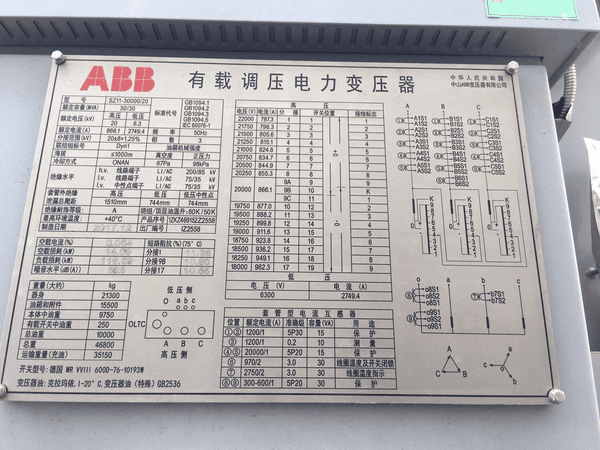
When we help a client specify a transformer, we start with the fundamental parameters. It’s like giving a tailor your measurements; without them, you won’t get a good fit. These parameters are non-negotiable and dictate the transformer’s performance and compatibility with your electrical system. Getting any of them wrong can lead to inefficiency at best, and catastrophic failure at worst. For an upgrade project, it’s especially important to match these parameters to your existing system to avoid issues with protection devices and parallel operation.
Essential Transformer Parameters
| Parameter | What It Is | Why It’s Critical for an Upgrade |
|---|---|---|
| Power Rating (kVA/MVA) | The maximum power the transformer can deliver. | Must meet current and future load demands. Undersizing leads to overload; oversizing wastes money and energy. |
| Voltage Rating (V) | The input (primary) and output (secondary) voltages. | Must match the grid voltage and the voltage required by the load. Incorrect voltage will damage equipment. |
| Impedance (%) | The opposition to current flow during a short circuit. | Affects the fault current level. The new transformer’s impedance must be compatible with existing switchgear and protection settings. |
| Vector Group | The phase relationship between primary and secondary windings. | Crucial for operating transformers in parallel. A mismatch will cause a short circuit. |
| Efficiency Class | A rating indicating energy losses (e.g., Level 1, 2). | Directly impacts your long-term operating costs. Higher efficiency means lower electricity bills. |
What information does a designer need to include when selecting a transformer?
As a manufacturer, we often get incomplete requests. Providing the right information upfront ensures you get an accurate quote and a perfectly matched transformer, faster.
A designer must provide the required voltage ratings, capacity (kVA), application, site environmental conditions (altitude, temperature), dimensional constraints, and any specific efficiency or material requirements. This detailed brief is crucial for a successful OEM/ODM project.
To build the perfect transformer for you, we need a complete picture. Think of it as a recipe. If you only tell us you want a "cake," we don’t know if you need a small cupcake or a three-tiered wedding cake. When you send us an inquiry, the more detail, the better. Start with the basic parameters we just discussed: capacity in kVA, primary and secondary voltages, and frequency. Then, tell us about the application. Is it for a factory with heavy motor loads? A solar farm? A commercial building? This helps us understand the load profile. Next, describe the environment. Is it indoors or outdoors? What are the maximum ambient temperature and altitude? A transformer designed for a cool climate will fail in a desert. Finally, provide any physical constraints, like maximum dimensions or weight, and specify any special requirements like high efficiency, low noise levels, or specific materials. A complete spec sheet saves time and prevents costly errors.
What are the steps involved in installation and maintenance of a power distribution transformer?
Your new transformer has arrived. Now comes the critical phase of installation and commissioning. A flawed process can damage the equipment and void your warranty.
Key steps include site preparation, safe de-energization and removal of the old unit, careful placement and connection of the new transformer, pre-energization testing14, and finally, safe energization. A long-term maintenance plan is then established.
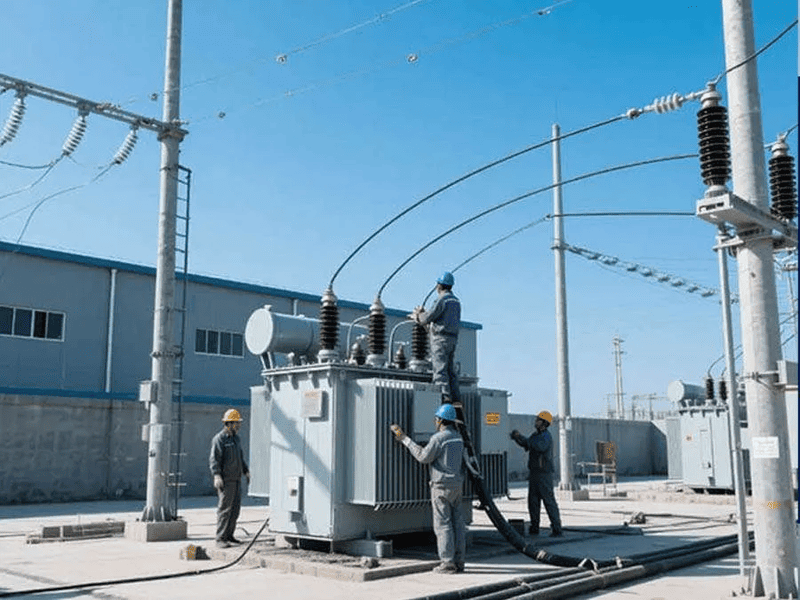
A successful installation is all about planning and safety. The first step is always site preparation. This means ensuring the concrete pad is level and strong enough, and that all clearances are met. Then comes the most dangerous part: de-energizing and disconnecting the old transformer. This must be done by qualified personnel following strict lockout/tagout procedures. Once the site is safe, the old unit is removed and the new one is carefully lifted into place. Connections are made to the primary and secondary terminals, ensuring they are clean and torqued correctly. But you don’t just flip the switch. We then perform a series of pre-energization checks, which we’ll discuss next. Only after these tests pass is the transformer energized, usually with no load at first to check voltages. After commissioning, we work with you to establish a maintenance schedule. For an oil-filled unit, this includes periodic oil sampling and visual inspections to ensure decades of reliable service.
What test should be done for a transformer before installing?
You wouldn’t drive a new car without checking it first. The same applies to a multi-thousand-dollar transformer. Pre-installation testing is not optional; it’s essential.
Before installation, critical tests must be performed. These include insulation resistance tests, winding resistance measurement, and turns ratio tests. These verify that the transformer was not damaged during shipping and is safe to energize.
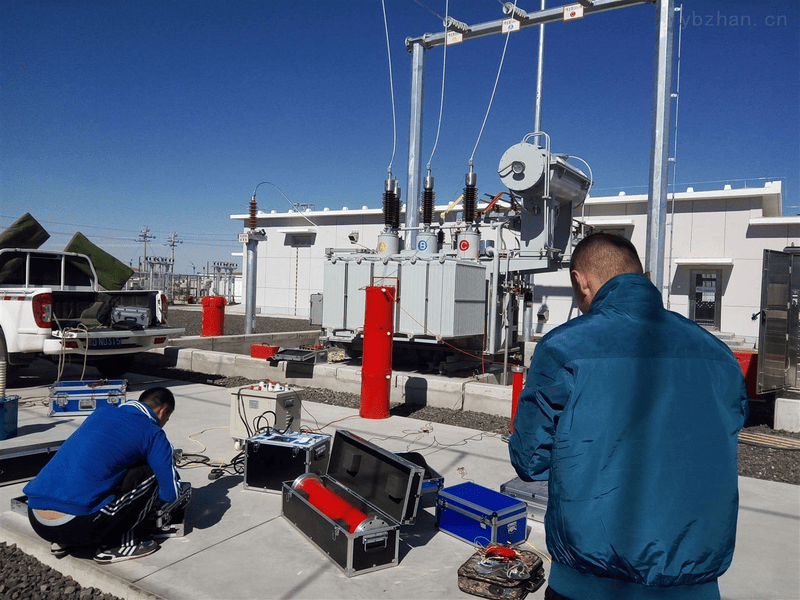
Every transformer we build at YEEG undergoes a full range of Factory Acceptance Tests (FAT)15 before it leaves our facility. We test everything from losses to insulation strength. We provide you with a detailed report from these tests. However, the journey from our factory to your site can be rough. That’s why Site Acceptance Tests (SAT)16 are so important. These are a series of checks you perform before connecting the transformer to power. The most important is the insulation resistance test (Megger test). This test checks for
Conclusion
A successful transformer upgrade hinges on a holistic view. By considering lifecycle costs, design, installation, and maintenance from the start, you ensure a reliable and cost-effective power system for years.****
-
Understanding load growth projections is crucial for selecting a transformer that meets future demands. ↩
-
Exploring total lifecycle costs can reveal hidden expenses that impact your investment over time. ↩
-
Staying updated on energy efficiency standards can help you choose a transformer that meets regulatory requirements. ↩
-
Learning about LCC analysis can help you evaluate the true cost of transformer ownership. ↩
-
Exploring the impact of EV charging stations can help you choose a transformer that accommodates new energy demands. ↩
-
Understanding grid modernization can help you select transformers that are compatible with evolving infrastructure. ↩
-
Learning about renewable integration can guide you in selecting transformers that support sustainable energy sources. ↩
-
Exploring H-class insulation can help you understand how to choose transformers for extreme climates. ↩
-
Exploring amorphous alloy core transformers can reveal options for minimizing long-term energy losses. ↩
-
Understanding the benefits of oil-immersed transformers can help you make informed decisions for outdoor applications. ↩
-
Understanding power capacity is essential for ensuring your transformer meets load demands. ↩
-
Exploring impedance can help you understand its impact on fault current levels and system compatibility. ↩
-
Learning about vector groups can help you avoid issues when operating transformers in parallel. ↩
-
Understanding pre-energization testing can ensure your transformer is safe and ready for operation. ↩
-
Learning about FAT can provide insights into the quality assurance process for transformers. ↩
-
Exploring SAT can help you verify the condition of your transformer before installation. ↩