A blown transformer can sound like a gunshot, throw a bright flash, and leave you in the dark. The danger is the energized area, not the noise.
Most blown transformer events are distribution faults that trigger protective devices and require replacement. Pole mounted units may be restored in hours, pad mounted units in 1 to 3 days, while substation transformers can take weeks or months.
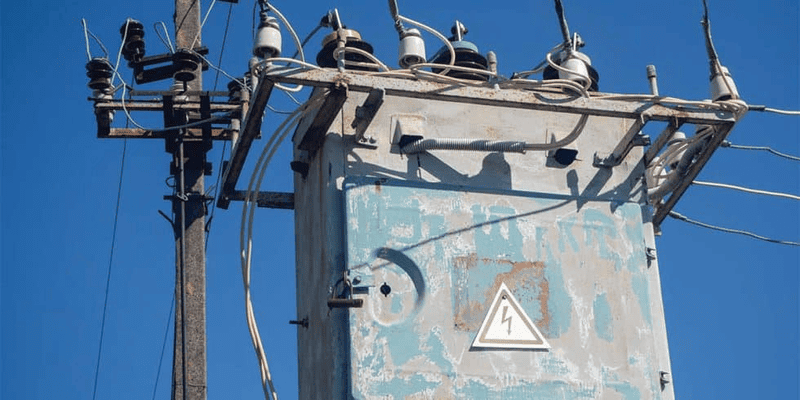
[image placeholder: blown transformer smoke ring how long to fix a blown transformer]
If you searched transformer blown or blown up transformer, you want two things fast: what happened and what happens next. I will keep it practical.
What is a blown transformer and what does it actually mean?
When people say blown transformer1, they usually mean a distribution transformer fault2 that caused an outage. It feels like an explosion, so the wording sticks.
In plain terms, a blown transformer means a fault occurred and the circuit was opened for safety. Often a fuse, breaker, or cutout operated first, and the transformer is replaced only if it was damaged.
What this means in real life:
- The utility isolates the line to prevent fire and shock risk
- Power may be rerouted while crews locate the fault
- The loud bang is often protection interrupting current, not the tank exploding
Quick safety rule:
- Stay away from the transformer and any downed lines
- Assume the ground nearby can be energized
- Call the utility, do not investigate up close
What causes a transformer to blow?
A transformer rarely fails from one single cause. It is usually long term stress plus one trigger event.
The most common causes of a transformer to blow are:
- Overload and overheating during peak demand
- External short circuits on the line or in customer equipment
- Lightning and switching surges that defeat surge protection
- Insulation aging from heat cycles over years
- Moisture ingress that reduces dielectric strength
- Loose connections that create arcing and hot spots
- Wildlife contact or debris causing phase to ground faults
- Oil degradation and gas generation in oil immersed units
If you see people searching exploding transformer, the dramatic part is the fault energy. The root cause is still electrical stress, insulation breakdown, or a severe external fault.
Why does a transformer blow during storms?
Storms add two enemies at once: high surges and physical faults. Lightning drives impulse voltage, and wind causes branches or debris to hit lines.
Storms do not create weak transformers, they expose them. If the unit was already stressed, the storm becomes the trigger.
Typical storm chain3:
- Surge hits the line
- Protective devices operate fast
- If insulation is near end of life, it fails instead of recovering
- Utility isolates the circuit and restores power section by section
What does a blown transformer look like, including the smoke ring?
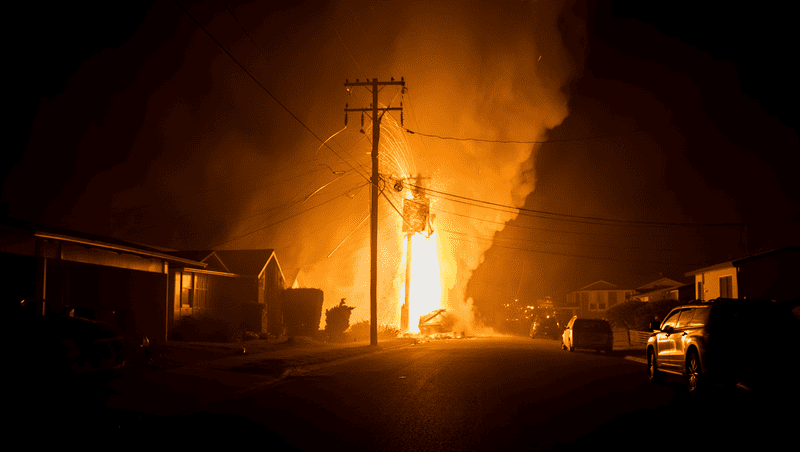
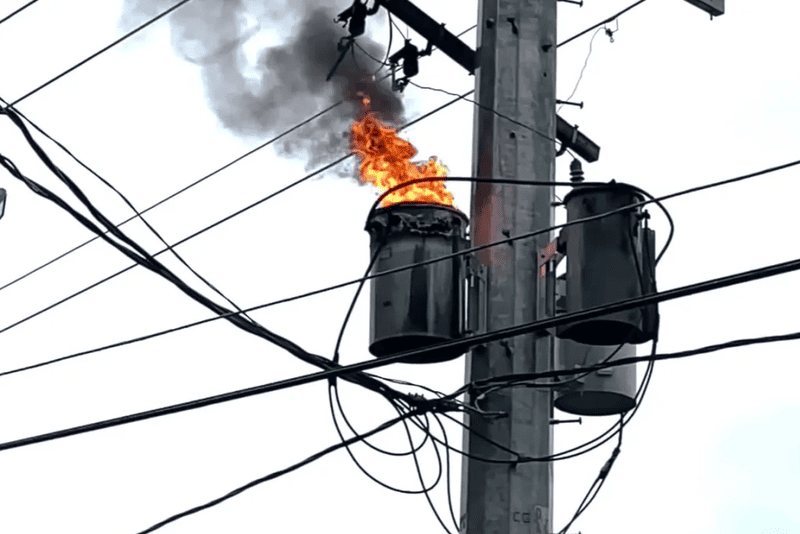
Most people search this to confirm what they saw. A blown transformer1 can look like a flash, smoke, or a small fire near the pole or cabinet.
A blown transformer smoke ring4 is usually vapor and hot gases expelled during a fault or protection operation. It can look scary, but it does not confirm a tank explosion by itself.
Common signs you may notice:
- One loud bang, or a series of pops
- A bright flash near a pole top or pad mounted cabinet
- Local outage affecting a small area
- Smoke that forms a ring shape in still air
- Scorch marks, damaged bushings, oil leaks, or a strong burnt smell
What not to do:
- Do not approach to take photos close up
- Do not touch fences, cabinets, or puddles near the unit
- Do not assume it is safe because the lights are out
How long does it take to fix a blown transformer?
People want a simple answer, but timelines depend on transformer type, spare inventory, and switching complexity.
Typical restoration ranges:
- Pole mounted distribution transformer: hours to 1 day
- Pad mounted transformer: 1 to 3 days
- Substation transformer failure: days for temporary switching, weeks or months for full replacement
Here is a practical timeline table:
| Scenario | What usually failed | Typical time to restore power |
|---|---|---|
| Pole mounted outage | fuse cutout, arrester, or the unit | 2 to 12 hours, sometimes 24 hours |
| Pad mounted outage | unit or cables, requires switching access | 1 to 3 days |
| Substation event | large transformer or major equipment | days for partial restore, weeks to months for replacement |
What drives the timeline:
- Crew dispatch and safety isolation
- Whether a spare transformer is on hand
- Switching and sectionalizing complexity
- Testing requirements before re energizing
- Traffic, permits, and access constraints in dense areas
If your facility is affected, confirm whether the fault is utility side or on your service equipment. Many delays happen because the wrong side is assumed.
How is a blown transformer fixed, repair or replace?
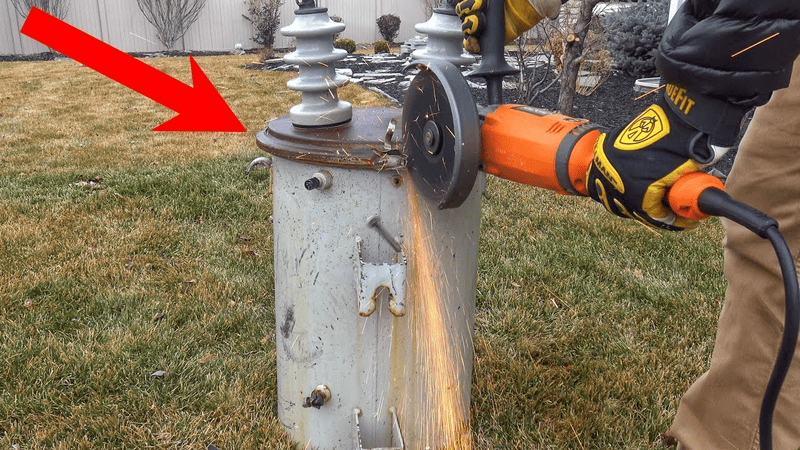
People ask how long does it take to repair a blown transformer, but most distribution units are replaced, not repaired in the field.
Most blown transformer fixes follow this sequence:
- Utility isolates the circuit and makes the site safe
- Fault location is confirmed and upstream protection is checked
- The damaged fuse, cutout, cable, or transformer is removed
- A replacement unit is installed and terminations are remade
- Basic checks are performed, then the line is energized
- Load is restored and monitored for re fault
When true repair happens:
- Large substation transformers may be repaired or rebuilt, but that is a specialized process
- Repair timelines are driven by diagnostics, parts, drying, vacuum filling, and testing
- In many grids today, lead time and logistics dominate the calendar
How can utilities and project owners reduce blowouts in grid upgrade projects5?
If your goal is fewer outages, prevention is about removing the stress chain, not hoping for luck.
Practical prevention checklist:
- Correct kVA sizing with realistic load growth margin
- Better thermal design and verified temperature rise limits
- Surge arresters and coordinated insulation level selection
- Routine inspections, infrared scans, and oil testing
- Moisture control and sealed tank options where appropriate
- Protection coordination, fuse sizing, and sectionalizing strategy
- Clear installation workmanship rules for terminations and grounding
Most failures are predictable when you track heat, moisture, and surge exposure. Data beats drama.
If you are sourcing distribution transformers for grid projects, what should you specify?
If you are an EPC, utility, industrial owner, or distributor, you do not want surprise failures after energizing.
A practical sourcing checklist:
- Voltage class, BIL, frequency, and vector group if applicable
- kVA rating with overload expectations stated clearly
- Cooling type and temperature rise limits
- Loss guarantees and efficiency target
- Routine test reports and optional type tests
- Tank sealing level, corrosion protection, and paint system
- Spare strategy, packaging, and delivery schedule risk plan
If you tell me your voltage class, kVA range, installation type pole or pad mounted, and climate conditions, I can help you turn it into a clean RFQ spec list that reduces outage risk and avoids overpaying.
FAQ
How long to fix a blown transformer?
Pole mounted units are often restored in hours to 1 day if spares and crews are available. Pad mounted cases may take 1 to 3 days when switching and access are involved.
How long does it take to repair a blown transformer?
Most distribution cases are replacement jobs. True repair is more common for large substation transformers and can take weeks or longer.
What causes a transformer to blow?
Overload, short circuits, surges, insulation aging6, moisture ingress7, loose connections8, and wildlife contact9 are the most common causes. Usually it is long term stress plus one trigger.
What does a blown transformer look like?
A bang, flash, local outage, smoke ring, scorch marks, or oil leaks are common signs. Stay away from the area and call the utility.
Is an exploding transformer different from a blown transformer?
Exploding is a dramatic description. The underlying event is an electrical fault, sometimes with rapid arcing and possible oil ignition, but the root cause is still stress and insulation breakdown.
-
Understanding the term ‘blown transformer’ helps clarify its implications for safety and power outages. ↩ ↩
-
Learn about the common causes of distribution transformer faults to better understand power reliability. ↩
-
Understanding the storm chain can help in preparing for transformer failures during severe weather. ↩
-
Learn what a smoke ring from a blown transformer signifies and its implications for safety. ↩
-
Discover strategies for reducing transformer failures during grid upgrades to enhance reliability. ↩
-
Learn about insulation aging and its impact on transformer reliability and lifespan. ↩
-
Explore the effects of moisture ingress on transformer performance and how to mitigate risks. ↩
-
Understanding the risks of loose connections can help in maintaining transformer safety and efficiency. ↩
-
Learn about the impact of wildlife on transformers and how to prevent related outages. ↩